27 Aug 2026
Understanding Cotton Yarn Counts: A Simple Guide for Textile Buyers
17 Jun 2026
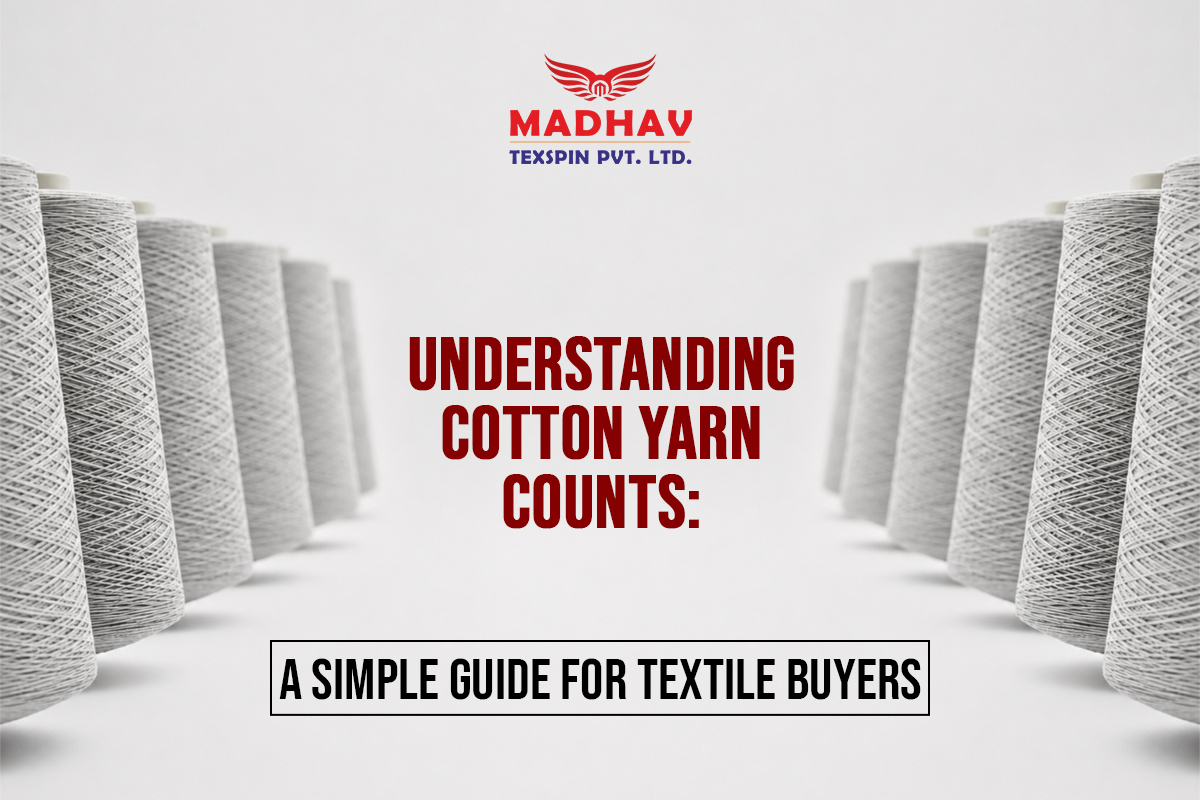
When you buy cotton yarn, one term you will hear again and again is “yarn count.” For textile buyers, understanding yarn count is important because it directly affects fabric quality, weight, softness, strength, appearance, and final product cost. Whether you are sourcing yarn for knitting, weaving, denim, shirting, towels, or home textiles, choosing the right count can make a major difference in production performance and customer satisfaction.
At Madhav Texspin, we believe that informed buying leads to better textile results. This simple guide will help you understand cotton yarn counts in an easy and practical way.
What Is Cotton Yarn Count?
Cotton yarn count is a number that tells us how fine or thick a yarn is. In simple words, it helps buyers understand the thickness of yarn before it is converted into fabric.
For cotton yarn, the most commonly used system is the English Cotton Count, also known as Ne count. In this system, the higher the count, the finer the yarn. The lower the count, the thicker or coarser the yarn.
For example:
- 10s cotton yarn is thick and coarse
- 20s cotton yarn is medium thickness
- 40s cotton yarn is finer
- 60s cotton yarn is very fine
This is one of the most important points every buyer should remember: in cotton count, higher number means finer yarn.
Why Yarn Count Matters for Textile Buyers
Yarn count is not just a technical number. It influences many important fabric properties.
A finer yarn count usually creates a softer, lighter, and smoother fabric. It is commonly used for premium shirts, fine knits, innerwear, and lightweight garments. On the other hand, a coarser yarn count produces heavier and stronger fabric, making it suitable for denim, towels, canvas, industrial fabric, and certain home textile products.
The right yarn count helps achieve the desired fabric GSM, texture, durability, drape, and end use performance. If the count is not suitable, the final fabric may become too heavy, too weak, too transparent, or unsuitable for the intended product.
Common Cotton Yarn Counts and Their Uses
Different yarn counts are selected depending on the fabric and final application. Here is a simple understanding:
6s to 16s cotton yarn:
Usually used for heavier fabrics such as denim, canvas, rugs, towels, and industrial textiles.
20s to 30s cotton yarn:
Commonly used in medium weight fabrics, T-shirts, hosiery, bedsheets, and general woven or knitted fabrics.
32s to 40s cotton yarn:
Popular for better quality garments, soft knitted fabrics, shirting, and lightweight home textiles.
50s to 80s cotton yarn:
Used for fine fabrics, premium shirting, voile, lawn, high quality apparel, and soft fashion products.
These applications may vary depending on fibre quality, spinning method, twist, fabric construction, and buyer requirements.
Single Yarn vs Double Yarn Count
Buyers may also come across terms like 40s single or 2/40s yarn. A single yarn means one strand of yarn, while a double or ply yarn means two or more yarns are twisted together.
For example, 2/40s means two strands of 40s yarn are twisted together. This improves strength, roundness, and fabric performance. Ply yarn is often preferred where extra durability, better weaving performance, or a premium finish is required.
Count Alone Does Not Decide Quality
Many buyers make the mistake of judging yarn only by count. While count is important, it is not the only factor that defines yarn quality.
Other important factors include:
- Cotton fibre quality
- Yarn strength
- Evenness
- Hairiness
- Twist level
- Carded or combed yarn
- Ring spun or open end yarn
- Moisture level
- Contamination control
- Packing and handling
For example, two suppliers may offer 40s cotton yarn, but the quality can differ depending on raw cotton, spinning technology, and quality control practices. That is why buyers should always look at complete yarn specifications, not just the count.
Carded vs Combed Cotton Yarn
This is another important point for buyers. Carded yarn is more economical and suitable for many regular textile applications. Combed yarn goes through an additional process where shorter fibres and impurities are removed, resulting in smoother, stronger, and cleaner yarn.
If you are producing premium fabric, soft garments, or export quality textiles, combed cotton yarn is often preferred. For cost sensitive applications, carded yarn can be a practical option.
How to Choose the Right Yarn Count
Before selecting cotton yarn count, buyers should consider the final product requirement. Ask yourself:
- What fabric GSM do I need?
- Is the product lightweight or heavy duty?
- Do I need softness or strength?
- Is it for knitting or weaving?
- What finish and appearance are expected?
- What is the target price range?
A reliable yarn supplier can help you choose the right count based on your fabric construction and end use.
Final Thoughts
Understanding cotton yarn count makes textile buying easier, smarter, and more accurate. The correct yarn count helps maintain fabric quality, reduce production issues, improve buyer satisfaction, and control cost effectively.
At Madhav Texspin, our focus is on delivering quality driven cotton yarn solutions that support the changing needs of textile manufacturers and global buyers. With the right yarn count and the right manufacturing partner, you can create fabrics that perform better, feel better, and meet market expectations with confidence.
Recent Posts