12 Oct 2026
Top Textile Industry Trends Every Manufacturer Should Watch in 2026
15 Jul 2026
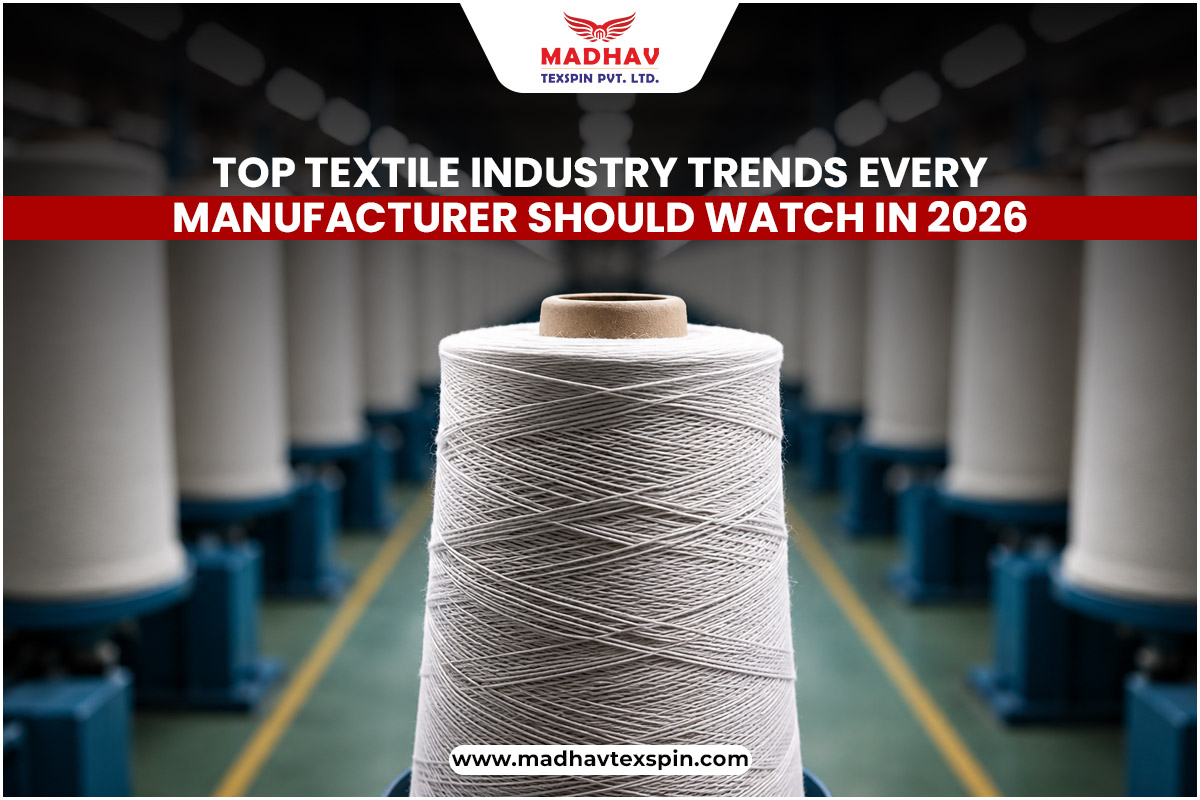
The textile industry has always evolved but the pace of change in 2026 is something different altogether. From AI driven factories to traceable supply chains and recycled fibers becoming mainstream, manufacturers are no longer just producing fabric. They’re navigating a landscape where sustainability, technology, and shifting consumer expectations all collide at once.
For yarn and textile manufacturers, staying still is no longer an option. The brands and mills that adapt early will define the next decade. At Madhav Texspin, we watch these shifts closely, not as distant predictions, but as real conversations happening with buyers, suppliers, and partners every day.
Here are the trends genuinely shaping the textile industry in 2026, and what every manufacturer should be paying attention to.
1. Sustainability Moves from Buzzword to Baseline
For years, sustainability was a marketing differentiator. In 2026, it’s becoming a basic requirement. The European Union’s Strategy for Sustainable and Circular Textiles is pushing manufacturers worldwide to rethink how products are made, sold, and recycled. By 2030, all textiles entering the EU market will need to be durable, repairable, and recyclable.
This regulatory pressure has triggered a global ripple effect. Manufacturers exporting to Europe and increasingly to the US, are now investing in cleaner production methods, water recycling systems, and verified eco certifications. Buyers want proof, not just promises.
2. Recycled and Regenerated Fibers Take Center Stage
Recycled polyester, recycled cotton, and regenerated fibers like Tencel and EcoVero are growing faster than ever. What was once a niche premium offering is becoming a standard line item in product catalogs.
Cotton recycling, in particular, is gaining momentum. Mills are investing in technologies that blend post consumer cotton waste with virgin fiber to create yarns that meet both performance and sustainability benchmarks. Manufacturers who develop expertise in recycled blends now will have a clear competitive edge as brands hunt for credible circular sourcing partners.
3. AI and Smart Factories Reshape Production
Artificial intelligence has officially moved beyond hype in the textile world. In 2026, AI will be used for real, measurable improvements: predictive maintenance on spinning machines, automated defect detection in fabric inspection, demand forecasting, and quality control through computer vision.
Smart factories, where machines communicate, self correct, and feed data into central dashboards are no longer reserved for billion dollar operations. Mid sized mills are adopting modular AI tools that improve yield, reduce waste, and shorten lead times. The manufacturers who treat AI as a daily operational tool, not a future ambition, are pulling ahead.
4. Traceability and Digital Product Passports
Transparency has become the new luxury. Consumers and brands want to know exactly where their fiber was grown, how it was spun, who handled it, and what chemicals touched it. The EU’s Digital Product Passport initiative is making traceability a legal requirement, and the rest of the world is following.
Blockchain based tracking, QR coded yarn cones, and certified supply chain data are becoming standard requests from buyers. Manufacturers who can document every step of their process clearly and credibly will win contracts that less transparent competitors lose.
5. Reshoring and Diversified Sourcing
Geopolitical tensions, shipping disruptions, and trade policy shifts have made global brands rethink their sourcing maps. The “China plus one” strategy has expanded into “China plus several,” with India, Vietnam, Bangladesh, Turkey, and parts of Africa gaining significant attention.
For Indian textile manufacturers especially, this is a meaningful opportunity. The country’s strong cotton base, skilled labor, and improving infrastructure position it well as a reliable alternative sourcing destination. Mills that can offer consistent quality, flexible order sizes, and strong communication are seeing increased buyer interest.
6. Performance and Functional Textiles Gain Ground
Consumers want more from their clothing than just comfort. Antimicrobial finishes, moisture wicking properties, UV protection, temperature regulation, and odour resistance are moving from sportswear into everyday apparel.
This is opening new markets for yarn manufacturers who can supply functional fibers or blends. Even traditional cotton yarn is being engineered with added performance characteristics. The line between fashion textiles and technical textiles continues to blur and that’s creating fresh demand for innovation at the yarn stage.
7. On Demand and Small Batch Production
The era of massive minimum order quantities is slowly giving way to flexible, on demand manufacturing. Brands, especially digital native ones, want shorter runs, faster turnarounds, and the ability to test products before scaling.
Technologies like 3D knitting, digital printing, and modular spinning lines are enabling this shift. Manufacturers willing to embrace flexibility, rather than rely solely on volume based economics, are unlocking new categories of clients.
8. Shifting Consumer Values: Quality Over Quantity
After years of fast fashion dominance, a meaningful counter trend is emerging. Consumers particularly Gen Z and younger millennials are increasingly drawn to durable, well made garments that last longer. Resale platforms, repair culture, and “buy less, buy better” messaging are gaining traction.
For manufacturers, this means quality consistency, premium finishes, and longer staple yarns are growing in importance. The race to the bottom on price is being challenged by a steady rise in demand for craftsmanship.
9. Energy Transition and Green Manufacturing
Energy costs and carbon emissions are now central to manufacturing decisions. Solar powered mills, biomass boilers, water recycling units, and energy efficient spinning technologies are becoming standard investments rather than optional upgrades.
Brands are actively measuring the carbon footprint of every supplier. Mills that can present low emission credentials are increasingly preferred and often command better pricing.
Preparing for What’s Next
The textile industry of 2026 rewards manufacturers who balance tradition with transformation. The fundamentals of yarn quality, reliable delivery, and strong relationships still matter. But layered on top of that foundation, success now requires sustainability credentials, digital fluency, supply chain transparency, and the willingness to evolve.
For manufacturers, this isn’t a year to react. It’s a year to lead.
Recent Posts