12 Oct 2026
Top Countries Importing Cotton Yarn from India in 2026
10 Sep 2026
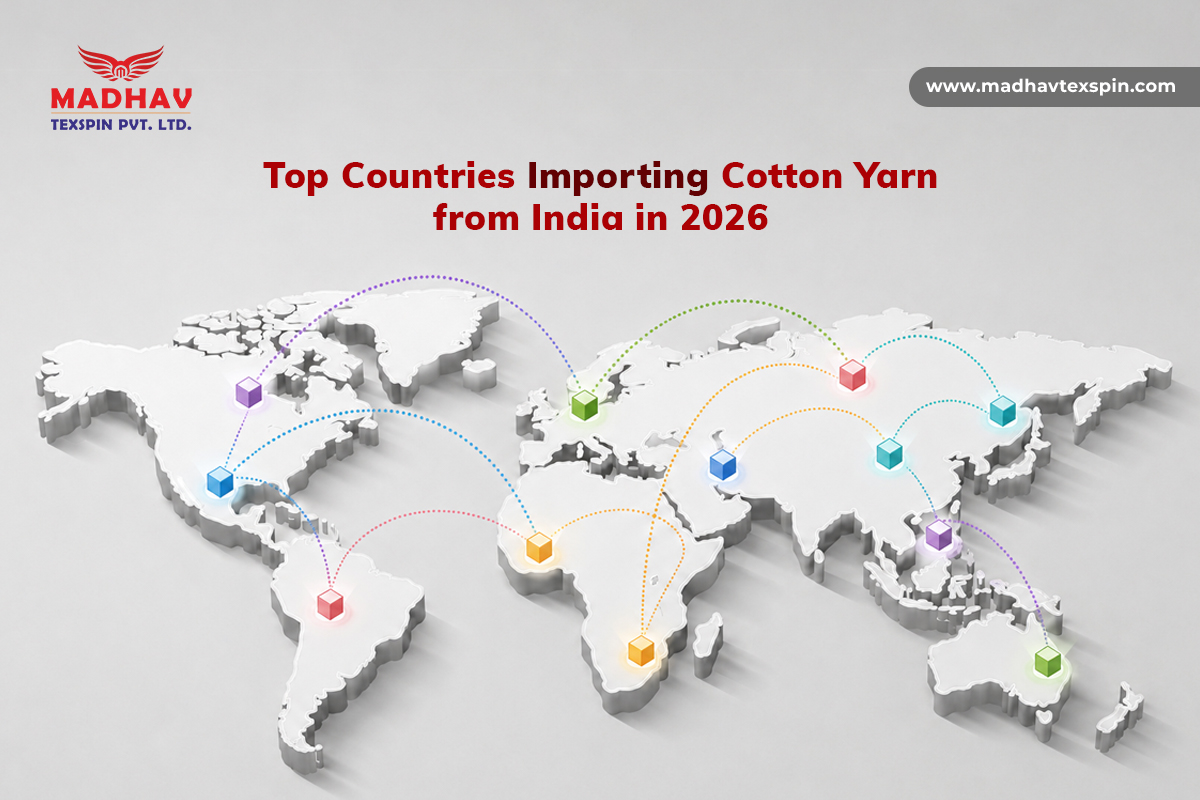
India has built a strong position in the global cotton yarn trade, supported by its large cotton growing base, established spinning industry, competitive production costs, and growing focus on quality. Indian cotton yarn is used by textile manufacturers across Asia, Europe, Africa, and the Americas, making the country an important link in international textile supply chains.
For Indian spinning mills such as Madhav Texspin in Rajkot, Gujarat, this international demand creates opportunities to build long term relationships with manufacturers, garment producers, and textile brands around the world.
So, which countries are showing the strongest demand for Indian cotton yarn in 2026? Here are some of the key markets.
1. Bangladesh – A Major Market for Indian Yarn
Bangladesh remains one of the most important destinations for Indian cotton yarn. Its enormous ready made garment industry depends on a reliable supply of yarn for knitting and weaving, particularly for products manufactured for international fashion brands.
India’s geographical proximity gives it an important advantage. Shorter transportation routes, competitive pricing, flexible supply, and consistent yarn quality make Indian suppliers an attractive option for Bangladeshi manufacturers.
The close connection between India’s spinning industry and Bangladesh’s garment sector is likely to remain important as global apparel production continues to expand.
2. China – Strong Textile Manufacturing Demand
China’s enormous textile and apparel manufacturing ecosystem continues to create demand for cotton yarn from international suppliers. Indian yarn producers have an opportunity to serve Chinese buyers looking for dependable quality and competitive sourcing options.
While China has a substantial domestic cotton and spinning industry, imported yarn can play an important role when manufacturers require specific qualities, counts, blends, or additional supply flexibility.
For Indian exporters, China’s scale makes it a market worth watching closely in 2026.
3. Egypt – Growing Demand for Indian Cotton Yarn
Egypt has become an increasingly relevant destination for Indian cotton yarn. Its textile industry combines locally produced cotton with imported textile inputs to manufacture fabrics and finished products for domestic and international markets.
Indian suppliers benefit from their ability to provide consistent yarn quality across different specifications. Growing textile production and Egypt’s position within regional and international supply chains are creating additional opportunities for cotton yarn exporters.
The market is particularly attractive for suppliers that can maintain dependable quality and delivery schedules.
4. Portugal – A Strategic European Market
Portugal is an important textile manufacturing center in Europe, particularly for premium apparel, home textiles, knitted products, and other value added goods.
European manufacturers often place considerable emphasis on yarn consistency, traceability, quality control, and reliable delivery. This creates opportunities for Indian spinning mills that can meet demanding technical specifications.
For Indian yarn exporters, Portugal is more than an individual market. It can also serve as a valuable connection to Europe’s wider textile supply chain.
5. Colombia – An Emerging Opportunity in Latin America
Colombia is gaining attention as a promising destination for Indian cotton yarn. Its textile and apparel industry serves both domestic consumers and export markets, creating demand for dependable raw materials.
Indian yarn manufacturers can benefit from this expanding opportunity by offering consistent quality, competitive commercial terms, and products suited to different textile applications.
As sourcing networks across Latin America diversify, Colombia could become increasingly relevant for Indian cotton yarn exporters.
6. Japan – Quality Comes First
Japan represents a different type of opportunity. Rather than competing only on price, suppliers entering the Japanese market must demonstrate strong consistency and quality.
Japanese textile manufacturers are known for their attention to yarn characteristics, processing performance, appearance, and reliability. This makes Japan a valuable market for spinning mills with disciplined quality control systems.
For manufacturers such as Madhav Texspin, maintaining controlled production processes and monitoring yarn performance can help build confidence among demanding international buyers.
7. Indonesia and Vietnam – Expanding Southeast Asian Demand
Indonesia and Vietnam are two important textile and apparel manufacturing centers in Southeast Asia. Both countries have extensive garment industries connected to international brands and export markets.
Their continued investment in textile manufacturing is supporting demand for imported textile raw materials, including cotton yarn. India’s location, established spinning infrastructure, and competitive production capabilities give Indian suppliers a natural opportunity to participate in these supply chains.
As Southeast Asia continues to strengthen its position in global apparel production, demand from these markets deserves close attention.
Other Markets Worth Watching
Indian cotton yarn is also exported to several other destinations, including Mauritius, Brazil, South Africa, the UAE, and other markets across Asia, Africa, Europe, and the Middle East.
Trade agreements and improving market access can further influence the competitiveness of Indian textile products. For exporters, these developments may create opportunities to reach new customers while strengthening existing international relationships.
The Future of Indian Cotton Yarn Exports
The global cotton yarn market is becoming increasingly competitive, but India’s combination of raw material availability, spinning expertise, manufacturing infrastructure, and export experience gives its textile industry a strong foundation.
Markets such as Bangladesh, China, Egypt, Portugal, Japan, Colombia, Indonesia, and Vietnam represent different opportunities, from high volume garment production to premium quality focused textile manufacturing.
For Indian spinning mills, the next phase of growth will depend not simply on producing more yarn, but on producing consistently better yarn, understanding individual market requirements, strengthening supply reliability, and building lasting relationships with global buyers.
For Madhav Texspin, this is where the opportunity lies. From Gujarat to international textile markets, the goal remains straightforward: deliver reliable cotton yarn that helps manufacturers produce better textiles and build stronger global supply chains.
Recent Posts