12 Oct 2026
The Growing Role of Automation in Textile Spinning Mills
27 Aug 2026
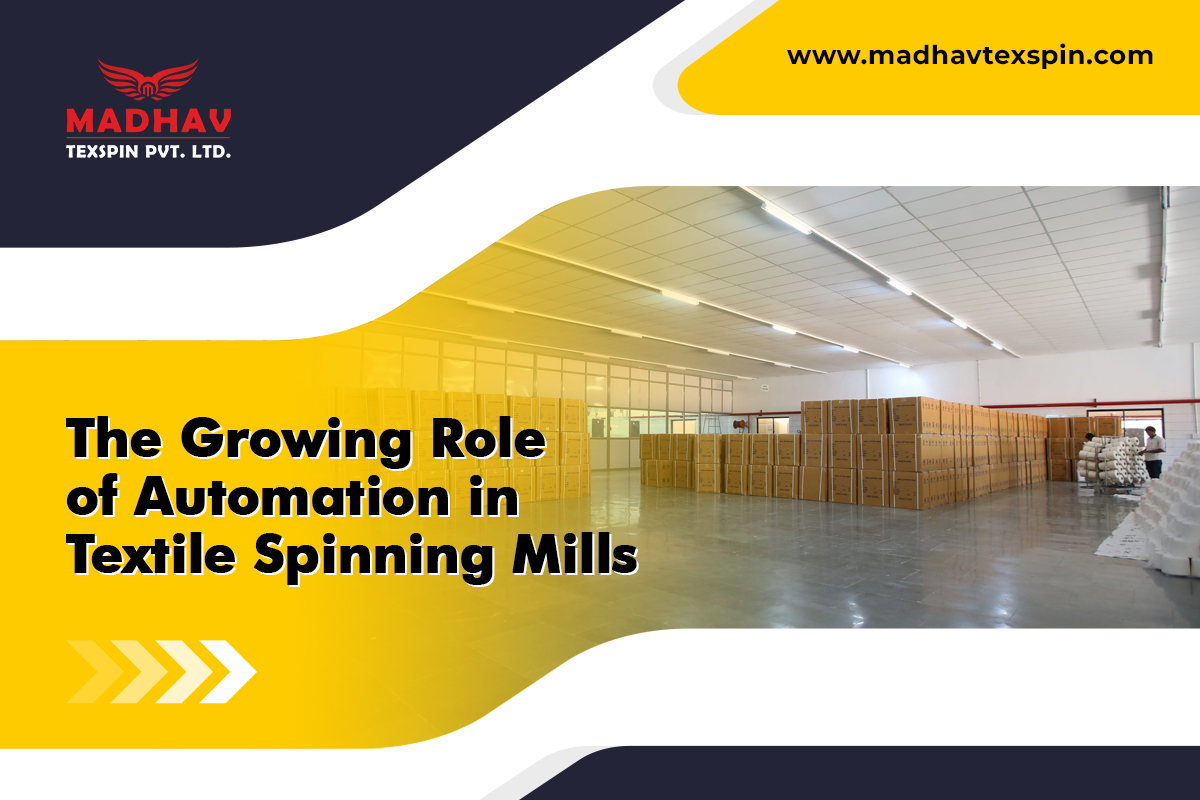
The textile industry has always evolved alongside technology, but the pace of transformation today is faster than ever. Rising customer expectations, increasing global competition, and the demand for consistent quality have made automation an essential part of modern textile manufacturing. For spinning mills, automation is no longer simply about reducing manual work; it is about improving efficiency, maintaining quality, minimizing waste, and delivering yarn that meets international standards.
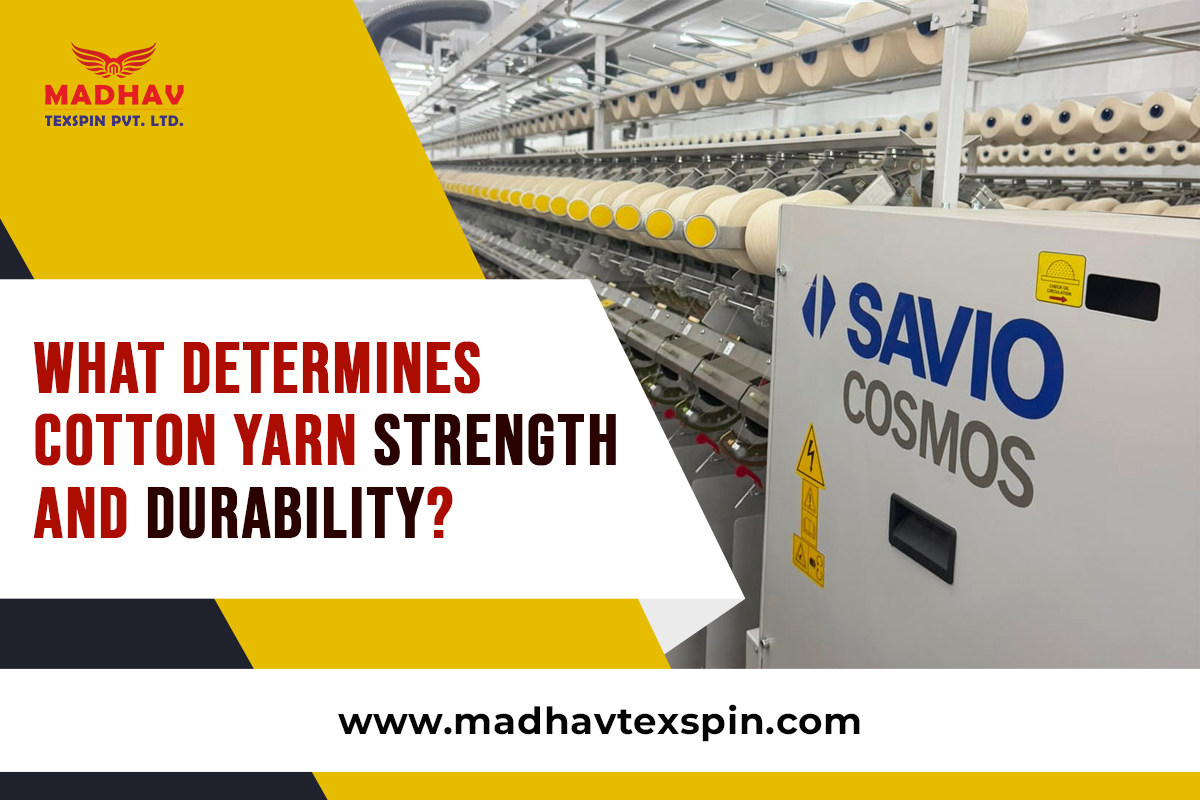
At Madhav Texspin, automation is a key pillar of our manufacturing philosophy. As a professionally managed cotton yarn manufacturer based in Rajkot, Gujarat, we combine advanced spinning technology with experienced professionals to produce high-quality cotton yarn for customers across domestic and international markets. Our modern facility, equipped with over 26,112 spindles and machinery from globally recognized manufacturers such as Trützschler, Rieter, LMW, and Savio, enables us to maintain consistency, productivity, and precision at every stage of production.
In this blog, we explore how automation is reshaping textile spinning mills and why it has become a defining factor for quality-focused yarn manufacturers.
Why Automation Matters in Modern Spinning
Producing premium cotton yarn involves multiple interconnected processes, from raw cotton handling and cleaning to carding, drawing, spinning, winding, and quality inspection. Even a minor variation in one stage can affect the strength, uniformity, and appearance of the final yarn.
Automation helps eliminate these inconsistencies by ensuring that every process operates within carefully controlled parameters. Machines continuously monitor production conditions, helping manufacturers maintain stable operations while reducing human error.
The result is better yarn quality, improved productivity, and greater confidence for customers who depend on consistent performance in weaving, knitting, and garment manufacturing.
Consistent Quality Across Every Batch
Consistency is one of the biggest challenges in textile production. Buyers expect every shipment to match the previous one in count, strength, twist, and evenness.
Automated production systems monitor critical parameters throughout the manufacturing process, allowing operators to identify and correct variations before they affect production. This real-time control ensures that yarn maintains uniform quality across both small and large production runs.
At Madhav Texspin, our quality-focused manufacturing approach helps deliver cotton yarn that performs reliably throughout downstream textile processes.
Reduced Yarn Breakage and Material Waste
Every yarn break during spinning or winding results in lost productivity and increased operational costs. Automation helps minimize these interruptions by maintaining optimal machine settings throughout production.
Advanced monitoring systems quickly detect irregularities, allowing corrective actions before defects spread through an entire production lot. This not only reduces yarn waste but also improves machine utilization and overall manufacturing efficiency.
Lower waste also supports sustainable manufacturing by making better use of valuable raw materials.
Supporting Sustainable Manufacturing
Sustainability has become a major priority across the global textile industry. Automation contributes significantly to environmentally responsible manufacturing by improving resource efficiency.
Modern spinning technologies help reduce energy consumption, minimize raw material waste, optimize machine performance, and improve overall operational efficiency. These improvements lower production costs while supporting more sustainable manufacturing practices.
For textile brands seeking responsible supply chain partners, automated manufacturing demonstrates a strong commitment to quality and resource conservation.
Improved Workplace Safety
Automation also creates a safer and more organized working environment. Modern systems reduce manual handling of materials, limit operator exposure to moving machinery, and simplify repetitive tasks.
Employees can focus more on monitoring, quality control, equipment management, and process optimization rather than physically demanding operations. This combination of technology and skilled manpower leads to greater productivity while maintaining workplace safety.
Meeting the Expectations of Global Buyers
International textile buyers increasingly look for suppliers that can consistently deliver quality products within strict timelines. Automated manufacturing helps spinning mills achieve the high standards required by exporters, garment manufacturers, fabric mills, and global textile brands.
Consistent production, reliable quality control, reduced lead times, and improved traceability all contribute to stronger customer confidence and long-term business relationships.
For yarn manufacturers competing in global markets, automation has become a competitive necessity rather than an optional investment.
Automation with Human Expertise
Although automation plays a critical role in modern spinning, technology alone cannot guarantee exceptional yarn quality. Skilled professionals remain essential for selecting raw cotton, optimizing machine settings, maintaining equipment, and continuously improving production processes.
The most successful spinning mills combine advanced automation with experienced technical teams who understand every stage of cotton yarn manufacturing.
At Madhav Texspin, we believe this balance between technology and expertise is the foundation of consistent excellence.
Why Choose Madhav Texspin?
Madhav Texspin is committed to delivering cotton yarn that meets the evolving needs of the global textile industry. Our investment in advanced spinning technology, modern manufacturing infrastructure, and rigorous quality control enables us to produce yarn that supports efficient weaving, knitting, dyeing, and garment production.
Our product portfolio includes Open End Yarn, Ring Spun Yarn, Carded Yarn, Combed Compact Yarn, Eli Twist Yarn, TFO/Multi Fold Yarn, along with organic and sustainable cotton yarn options for diverse textile applications.
With a focus on innovation, consistency, and customer satisfaction, we continue to strengthen our position as a trusted cotton yarn manufacturing partner for textile businesses worldwide.
Conclusion
Automation is transforming textile spinning mills by improving quality, efficiency, sustainability, and operational reliability. As global textile markets continue to evolve, manufacturers that embrace advanced technology will be better equipped to meet growing customer expectations while maintaining consistent product quality.
At Madhav Texspin, automation is integrated into every stage of our manufacturing process, enabling us to produce premium cotton yarn that supports superior fabric performance and long-lasting garments. By combining state-of-the-art technology with industry expertise and a commitment to continuous improvement, we remain dedicated to supplying reliable yarn solutions for the textile industry of today and tomorrow.
Recent Posts