12 Oct 2026
Everything Textile Manufacturers Should Know About Yarn Testing
11 Aug 2026
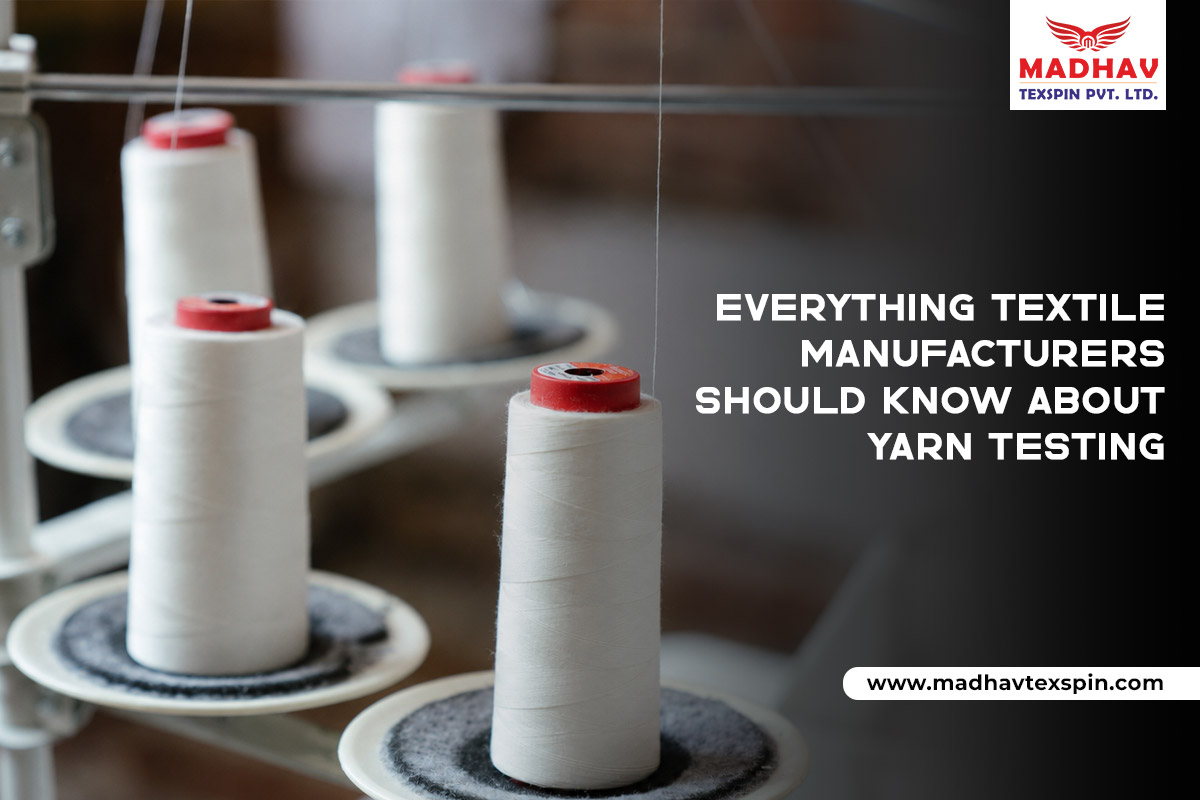
In the textile industry, quality is never determined by appearance alone. Before cotton yarn is woven into fabric or knitted into garments, it must pass a series of quality checks that ensure it can perform consistently throughout the manufacturing process. This is where yarn testing becomes one of the most important steps in textile production.
For textile manufacturers, yarn testing is more than a quality control procedure. It helps reduce production issues, improve fabric performance, minimize waste, and deliver products that meet customer expectations. Whether you manufacture apparel, home textiles, denim, or industrial fabrics, the quality of your finished product depends heavily on the quality of the yarn you start with.
At Madhav Texspin, we believe that premium yarn is built on precision, consistency, and continuous quality monitoring. As a professionally managed cotton yarn manufacturer based in Rajkot, Gujarat, our modern spinning facility combines advanced machinery with rigorous testing processes to ensure every yarn batch delivers dependable performance for customers across domestic and international markets.
Why Is Yarn Testing Important?
Every stage of textile manufacturing depends on consistent yarn quality. Even small variations in yarn count, strength, or evenness can lead to weaving stoppages, knitting defects, uneven dyeing, excessive fabric waste, and customer complaints.
Comprehensive yarn testing helps manufacturers:
- Maintain consistent product quality
- Reduce machine downtime
- Improve weaving and knitting efficiency
- Lower production waste
- Ensure reliable dye absorption
- Increase garment durability
- Meet domestic and international quality standards
Simply put, proper yarn testing protects both production efficiency and brand reputation.
Yarn Count – The Foundation of Yarn Selection
One of the first properties tested is yarn count, which indicates the thickness or fineness of the yarn. Different textile applications require different yarn counts depending on the desired fabric construction.
Accurate yarn count is essential because variations can affect fabric weight, appearance, strength, and overall performance. Consistent count also ensures uniform production throughout large manufacturing runs.
Yarn Strength – Measuring Performance
Strength is among the most critical quality parameters in cotton yarn.
Strong yarn performs better during weaving, knitting, dyeing, and finishing while reducing breakage on textile machines. It also contributes to better seam strength, improved fabric durability, and longer garment life.
Manufacturers producing high performance fabrics rely on strong, well tested yarn to maintain production efficiency and reduce costly interruptions.
Yarn Evenness – Consistency Matters
Evenness refers to the uniform distribution of fibres throughout the yarn.
Uneven yarn may contain thick places, thin places, or irregular sections that create defects during fabric production. These imperfections often appear as streaks, uneven textures, or weak spots in finished fabrics.
Modern yarn testing helps identify these variations before the yarn reaches the customer’s production line, ensuring smoother manufacturing and superior fabric quality.
Yarn Twist – Finding the Right Balance
Twist holds cotton fibres together to create yarn.
Too little twist results in weak yarn that breaks easily, while excessive twist can reduce softness, flexibility, and fabric comfort.
Proper twist testing ensures the yarn offers the ideal balance between strength, durability, and handling characteristics required for its intended application.
Hairiness – A Small Detail with a Big Impact
Hairiness measures the number of loose fibre ends extending from the yarn surface.
Excessive hairiness can create problems during weaving, increase lint generation, reduce dye uniformity, and contribute to fabric pilling after repeated use.
By carefully monitoring hairiness, manufacturers can produce cleaner yarn that delivers smoother fabrics and improved garment appearance.
Elongation and Elastic Performance
Another important property is yarn elongation, which measures how much the yarn stretches before breaking.
Balanced elongation helps fabrics withstand mechanical stress during manufacturing and improves the durability of finished garments. It also contributes to better sewing performance and reduced seam failures.
How Yarn Testing Improves Textile Manufacturing
Reliable yarn testing benefits every stage of textile production.
- For weaving mills, it reduces end breakages and improves loom efficiency.
- For knitting units, it minimizes machine stoppages and fabric defects.
- For dyeing houses, consistent yarn ensures uniform colour absorption.
- For garment manufacturers, quality yarn improves seam strength, comfort, and product durability.
Ultimately, investing in tested, high quality yarn reduces production costs while improving customer satisfaction.
Technology Has Changed Modern Yarn Testing
Today’s spinning mills use advanced laboratory equipment and digital quality monitoring systems to evaluate yarn performance with remarkable accuracy.
Modern testing instruments measure multiple quality parameters quickly and consistently, allowing manufacturers to identify variations before they affect production.
Combined with automated manufacturing systems, these technologies enable spinning mills to maintain consistent quality across large production volumes while continuously improving efficiency.
At Madhav Texspin, quality assurance is integrated throughout the manufacturing process rather than being limited to the final inspection.
From raw cotton selection to spinning, winding, and final packaging, every stage is monitored using standardized quality procedures. Our experienced technical team continuously evaluates key yarn parameters to ensure customers receive products that meet demanding textile manufacturing requirements.
Supported by advanced spinning technology, modern infrastructure, and a commitment to continuous improvement, we manufacture cotton yarn that delivers consistency, strength, and dependable performance across diverse textile applications.
Conclusion
Yarn testing is the foundation of quality textile manufacturing. Every parameter from yarn count and strength to evenness, twist, and hairiness plays a direct role in determining how efficiently fabrics are produced and how well finished garments perform.
As textile markets become increasingly competitive, manufacturers cannot afford inconsistencies in their raw materials. Partnering with a trusted cotton yarn manufacturer that emphasizes comprehensive quality testing is essential for producing fabrics and garments that meet the highest industry standards.
At Madhav Texspin, we remain committed to delivering premium cotton yarn that combines advanced manufacturing, strict quality control, and reliable performance helping textile manufacturers create products that stand out in today’s global marketplace.
Recent Posts